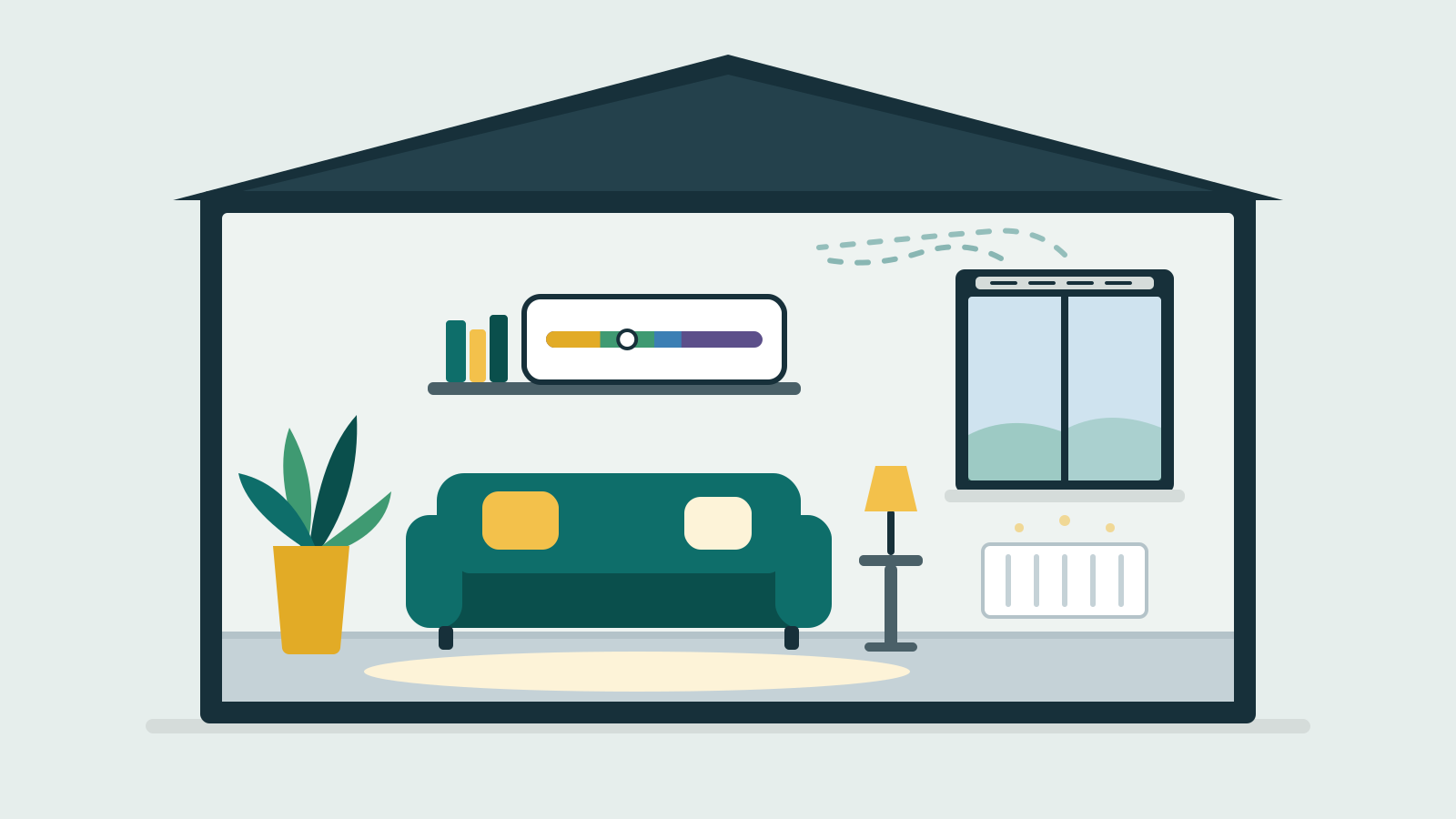
What the numbers mean
40–60% Damp Mould risk
above 70%
| Reading | What it means | What to do |
|---|---|---|
| Below 40% | Dry. Can irritate eyes, skin and throats. No damp risk. | Turn the dehumidifier down or off, and don't over-ventilate in cold weather. |
| 40 to 60% | Comfortable, and low enough to keep walls and windows dry in most rooms. | Keep doing what you're doing. |
| 60 to 70% | Higher than ideal. Expect wet windows on cold mornings. | Ventilate more, and look at what's adding moisture. |
| Above 70% | Mould can grow on cool surfaces if it stays this high. | Ventilate, find the source, and consider a dehumidifier. |
These are the bands this site uses in its calculators. They are a working guide for everyday use, not a legal limit.
What Building Regulations aim for
Building Regulations guidance on ventilation in England (Approved Document F) sets humidity targets for new homes in the colder months. Averaged over time, the humidity in a room should stay below:
- 65% averaged over a month
- 75% averaged over a week
- 85% averaged over a day
The longer the period, the lower the limit. So a bathroom that hits 90% for half an hour after a shower is within the targets, while a bedroom that sits at 70% night after night through the winter is the room likely to grow mould.
Why temperature changes the answer
Relative humidity is how much water the air is holding compared with the most it could hold at that temperature. Warm air holds more than cold air. So the same amount of moisture gives a higher reading in a cold room than in a warm one, and the air right next to a cold outside wall or window is more humid than the middle of the room.
Two things follow. Letting a room get cold pushes the reading up even though no water has been added. And a room that reads a comfortable 60% in the middle can still grow mould in a cold corner, behind a wardrobe on an outside wall, or round a window frame, because those surfaces are often a few degrees colder than the air you're measuring.
Mould risk checker Put in a room's temperature and humidity to see the surface temperature at which walls and windows start to get wet.How to measure it
You need a hygrometer: a small, cheap digital display that shows temperature and humidity. To get a reading you can trust:
- put it at chest height on an inside wall, away from windows, radiators, kettles and the bathroom door
- give it half an hour to settle after you move it
- read it at the same time each day, ideally first thing in the morning before you open windows
- check every room you're worried about, because one room can be much damper than the rest
For checking one room
TempPro TP50 Hygrometer Thermometer
- Type
- Digital
- Accuracy
- ±3%
- Min/max memory
A basic digital hygrometer with a stated accuracy of ±3% and a min/max memory, so you can see the highest reading overnight without getting up to check.
More choices, including multi-packs and models that log readings to your phone, in our hygrometer guide.
How to bring humidity down
Start at the top. The first steps are free.
- Deal with moisture at the source. Put lids on pans, run the extractor fan when you cook or shower and for a while after, and shut the kitchen and bathroom doors so the steam doesn't spread.
- Dry washing outside, or in one room with a dehumidifier. Wet washing on radiators around the house puts a lot of water into the air. How to dry clothes indoors without damp.
- Keep a steady flow of fresh air. Leave trickle vents open, and open a window for a few minutes after you get up.
- Keep rooms evenly warm. Low, steady heat keeps walls warmer than short blasts, which lowers the humidity next to them.
- Run a dehumidifier if a room still reads above 60% with the steps above in place.
Sources
Checked 14 October 2026.