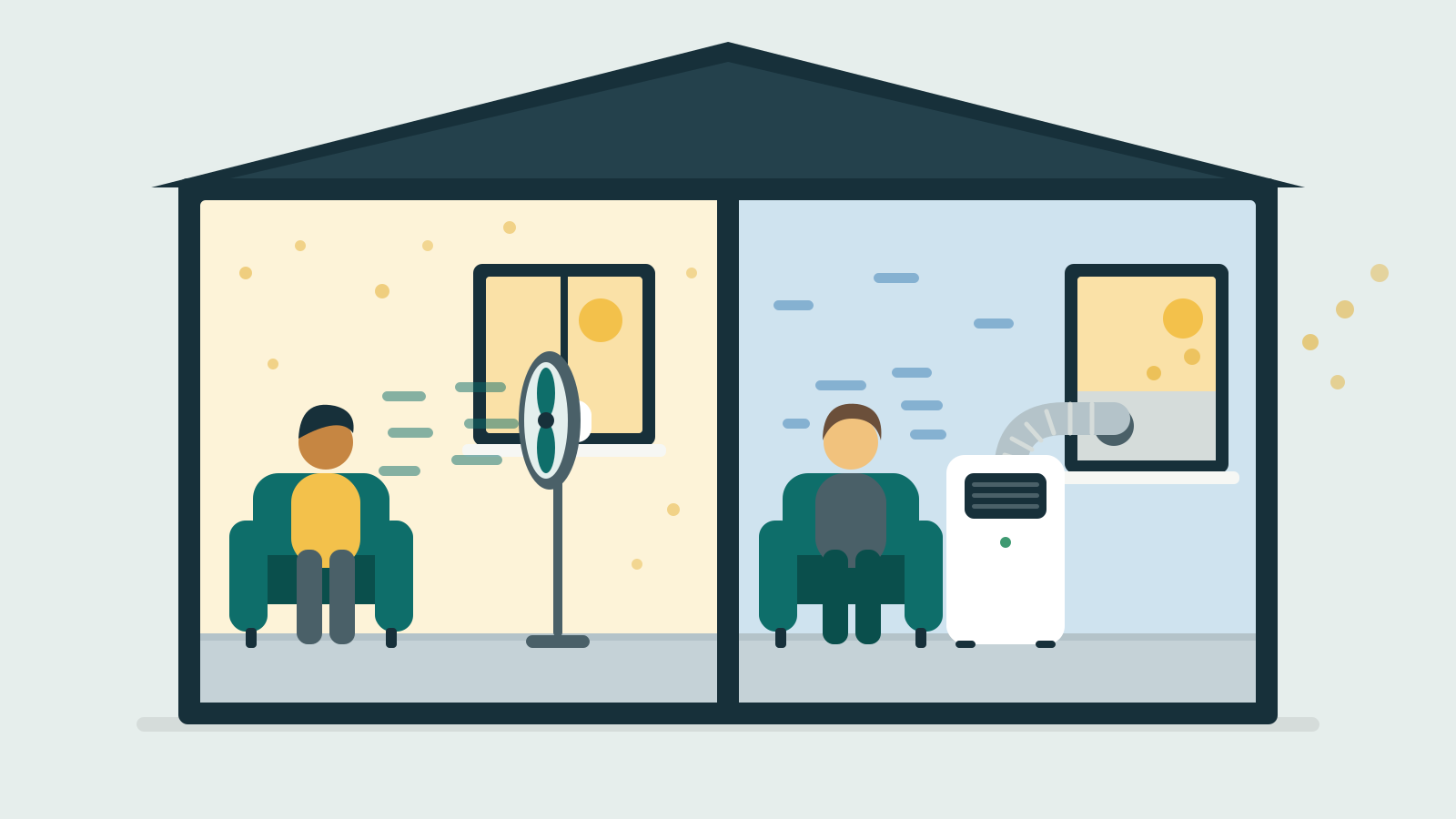
How each one cools
A fan only moves air. Moving air helps sweat evaporate from your skin, and that is what makes you feel cooler. The thermometer on the wall won't change, and the motor adds a little heat of its own. Once you leave the room, the fan is doing nothing useful.
A portable air conditioner works like a fridge. It draws the room's air over cold coils, which takes heat and some moisture out of it, and blows the cooled air back into the room. The heat it collected, plus the heat from its own compressor, goes out through a wide exhaust hose. The room gets cooler, and stays cooler while the unit runs.
NHS advice is that electric fans can help when the temperature is below 35°C. On days hotter than that, a fan on its own may not be enough, and that is one of the cases where an air conditioner earns its running cost.
Fan and air conditioner side by side
The power and noise rows come from the rated specs of the 5 fans and 3 portable air conditioners in our list.
| Fan | Portable air conditioner | |
|---|---|---|
| What it cools | You, while you're in the airflow | The whole room |
| Average power | 35W, 0.9p an hour | 847W, 22p an hour |
| Eight hours overnight | 7.4p | Up to £1.78 |
| Rated noise | 20 to 35dB | 54 to 58dB |
| Needs a window | No | Yes, for the exhaust hose |
| Takes moisture out of the air | No | Yes, as it cools |
| Setting up | Plug in | Fit the hose and window kit, then plug in |
The air conditioner figure is the most it costs. Its compressor switches off once the room reaches the temperature you set, so on a mild night it uses less. Full tables for every model are on the fan and air conditioner running costs page.
Costs use 26.32p per kWh, the Ofgem price cap, Direct Debit average for England, Scotland and Wales for 1 October to 31 December 2026. Your own tariff may differ. How we calculate.
Single-hose or dual-hose
All 3 air conditioners in our list are single-hose, because we couldn't find a dual-hose portable model with published specs on sale at Amazon UK. The difference is where the unit gets the air it uses to carry heat away.
- Single-hose models take that air from the room you are cooling and blow it out of the window. The air that leaves has to be replaced, so warm air is drawn in from outside and from the rest of the house, through gaps around doors and windows. That works against the cooling, especially on very hot days.
- Dual-hose models pull outside air in through one hose, use it to carry the heat away, and send it back out through the other. Less of the room's cooled air is thrown away, so they tend to cope better with larger rooms and hotter weather. They are usually bulkier, and you have two hoses to fit at the window.
For a bedroom, a single-hose model the right size for the room is usually enough. For a big living room or a loft room that gets very hot, a dual-hose model copes better, but none in our list is dual-hose, so check the room rating carefully and expect a single-hose model to struggle on the hottest days.
The exhaust hose has to go out of a window
Every portable air conditioner needs somewhere to dump its heat. If the hose isn't vented outside, the unit puts more heat into the room than it takes out, because its own compressor adds heat as well.
- Most come with a window kit: a panel that fills the gap of an open sash or casement window around the end of the hose. Seal it as well as you can, because any gap lets hot air straight back in.
- Keep the hose as short and straight as it will go. A long or kinked hose holds back the airflow and makes the unit work harder.
- Think about security before leaving a ground-floor window open overnight with a hose in it.
- The water the unit takes out of the air has to go somewhere. Some models blow most of it out through the hose, others collect it in a tank or tray that needs emptying. The manual says which.
Check the room-size rating too. Each model in our list gives the largest room it is meant for, and one that is too small will run flat out without getting the room comfortable.
Noise
A portable air conditioner keeps its compressor and fans inside the room with you, so it is louder than a fan. The rated noise of the air conditioners in our list runs from 54 to 58dB, against 20 to 35dB for the fans. The decibel scale is logarithmic, so a gap of a few decibels sounds bigger than the numbers suggest.
The compressor also clicks on and off as it holds the temperature, which some people find harder to sleep through than a steady hum. If you're a light sleeper, cool the bedroom in the evening with the door shut, then switch the air conditioner off and use a fan overnight. Our guide to the best fan for a bedroom compares fans by rated noise.
Our picks
These are chosen by their specs. We haven't tested them ourselves; the reasons say which spec puts each one here.
If a fan will do
MeacoFan 1056 Air Circulator
- Type
- Desk fan
- Power
- 24W
- Noise
- 29dB
- Cost per hour
- 0.6p
- Timer
- Remote control
The lowest rated power of any fan in our list, at 24W, so it costs 0.6p an hour or 5.1p for a full night. Its rated noise is 29dB.
For a bedroom
Pro Breeze 7000 BTU Portable Air Conditioner
- Type
- Single-hose
- Cooling power
- 7,000 BTU
- Room up to
- 20 m²
- Power
- 750W
- Noise
- 54dB
- Cost per hour
- 20p
- Timer
- Remote control
- Dehumidify mode
The smallest air conditioner in our list, at 7,000 BTU, rated for rooms up to 20 m². Check your room's floor area against that figure. At 750W it costs up to 20p an hour. Its 54dB noise rating is the lowest of the air conditioners we list.
For a living room or large room
Pro Breeze 12,000 BTU Smart Portable Air Conditioner
- Type
- Single-hose
- Cooling power
- 12,000 BTU
- Room up to
- 30 m²
- Power
- 780W
- Noise
- 58dB
- Cost per hour
- 21p
- Timer
- Remote control
- Dehumidify mode
The largest room rating in our list. Rated at 12,000 BTU for rooms up to 30 m². It draws 780W, or up to 21p an hour, and its noise rating is 58dB.
Which one to choose
Start with a fan if you mainly need to feel cooler where you sit or sleep, the room is below 35°C, and you want to keep the cost down. Also do the free things first: keep the curtains shut on the sunny side in the day and open windows once it's cooler outside. How to keep a bedroom cool in a heatwave goes through them.
Consider an air conditioner if the room stays too hot to sleep in night after night, if it is a loft or a south-facing room that bakes in the afternoon, or if someone in the house is more at risk from heat, such as a baby, an older person or someone with a long-term health condition.
Sources
Checked 15 October 2026.