What your landlord is responsible for
Government guidance for landlords says plainly that landlords are legally responsible for addressing damp and mould, and that it is unreasonable to blame it on tenants' "lifestyle choices". It names the usual causes as building defects, poor ventilation, poor heating and poor energy efficiency.
Shelter lists the kinds of problem a landlord must fix, including:
- leaking pipes, roofs or gutters
- cracked walls and rotten window frames
- a broken boiler or heating
- poor ventilation, including extractor fans the landlord has put in
Your landlord should try to find out what is causing the damp. If they can't, Shelter says they should get a damp surveyor in, and you don't pay for it. They should not just tell you to keep painting over mould that comes back.
Condensation from cooking, showers and drying washing is the one area where what you do day to day matters. Shelter suggests opening windows regularly, using extractor fans and drying clothes outdoors or in a dryer, and telling your landlord if the mould still comes back. Landlords don't usually have to make improvements, but Shelter says they may have to, for example by insulating walls or the roof, if repairs alone don't stop damp that makes the home unfit to live in. How to tell condensation from rising and penetrating damp.
The laws that apply
Homes (Fitness for Human Habitation) Act 2018. Since 20 March 2019, landlords in England must keep rented homes fit to live in. It covers private, housing association and council tenants on rolling tenancies or fixed terms of less than seven years, but not people on a licence, such as lodgers. "Damp and mould growth" is one of the listed hazards. If your home is unfit, you can take your landlord to court, and the court can order repairs and compensation. Your landlord does not have to fix problems caused by you or another tenant behaving irresponsibly.
Awaab's Law (social housing now). Since October 2025, council and housing association landlords in England have had to meet fixed deadlines for damp and mould that puts your health at serious risk:
- emergency hazards: investigate and make safe within 24 hours
- significant damp and mould: investigate within 10 working days, then make the home safe within 5 working days of the investigation finishing
- a written summary of what they found within 3 working days of the investigation
- any further work started, or planned to start, within 5 working days, and all work started within 12 weeks
If the home can't be made safe in time, the landlord must offer you somewhere suitable to stay.
Awaab's Law (private renting, coming later). The Renters' Rights Act 2025 extends Awaab's Law to private rented homes, but there is no start date yet. On 9 October 2026 the government opened a consultation on how to apply it, including the timescales. It closes on 18 December 2026, and a government response will follow.
Decent Homes Standard. A reformed standard will apply to both private and social rented homes from 2035 at the latest. One of its rules is that a home should be free of damp and mould. Councils will enforce it for private landlords. Until then, private renters can rely on the Fitness for Human Habitation rules and the council powers below.
Fear of eviction. Since 1 May 2026, private landlords in England can no longer evict you using a "no fault" section 21 notice, even if your tenancy agreement says they can. They can still use other legal grounds, such as needing to sell or move in, but not in the first 12 months of a tenancy.
What to do, step by step
- Report it in writing. Email or text your landlord or letting agent so there is a dated record. Say where the damp or mould is, when you first saw it, whether it is getting worse, and anything you have already tried. Mention anyone in the household who is more at risk, such as a baby, an older person or someone with a lung condition. Shelter has letter templates on its damp and mould pages.
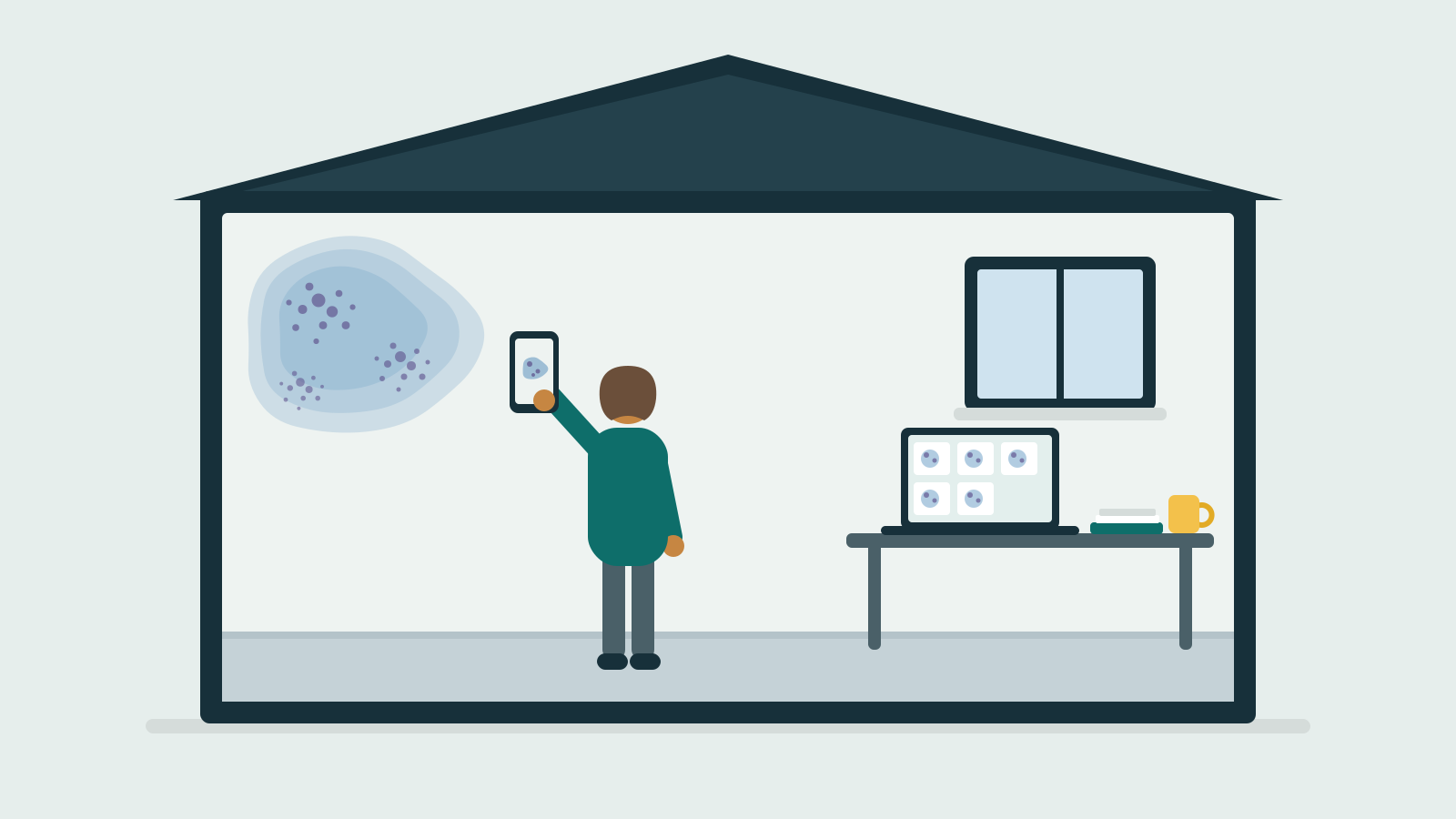
- Keep evidence. Take dated photos every week or two from the same spot. Keep copies of every message and note the date of any phone call. Keep receipts for damaged clothes, bedding or furniture. A hygrometer reading taken at the same time each morning shows how humid the room stays.
- Let them in to inspect. They need access to find the cause. Keep paying your rent while you wait for repairs.
- Keep the room as dry as you reasonably can in the meantime: open trickle vents, use extractor fans, wipe wet windows and clean mould safely. How to clean mould off walls.
- Chase it in writing if nothing happens. Refer to your first message and ask for a date for the inspection or repair.
If your landlord does nothing
Private renters
- Contact your council's environmental health or private housing team. They can inspect your home and, if they think the problem could harm you, they must take action. The council can order your landlord to fix damp and mould.
- Complain to the letting agent if they ignore you, won't pass the problem on, or tell you to fix it yourself. Ask for their complaints policy.
- Get advice about a claim. You may be able to claim compensation if damp has damaged your belongings, affected your health or made the home unfit. Shelter says you usually have at least three years to start a claim.
- There is no ombudsman for private landlords yet. A new Private Rented Sector Landlord Ombudsman is being set up, and the government expects private landlords to have to join it in 2028.
Council and housing association tenants
- Use your landlord's formal complaints process. Your landlord can't treat you unfairly for complaining.
- Go to the Housing Ombudsman if you are unhappy with the final response. It is free and independent and can tell your landlord to put things right, pay compensation or apologise. You can call it on 0300 111 3000 or complain through its website.
- Legal action. You can take a claim to court, and legal aid may be available for disrepair that seriously risks illness or injury. Get advice first, because you may have to pay the landlord's costs if a claim fails.
Sources
- GOV.UK: Understanding and addressing the health risks of damp and mould in the home
- GOV.UK: Private renting, repairs
- GOV.UK: Guide for tenants, Homes (Fitness for Human Habitation) Act 2018
- GOV.UK: Awaab's Law, guidance for tenants in social housing
- GOV.UK: Extending Awaab's Law to private rented tenancies and to licences (consultation)
- GOV.UK: Renters' Rights Act overview for tenants
- UK Parliament: Written statement on Renters' Rights Act implementation, 17 November 2025
- GOV.UK: Reformed Decent Homes Standard for social and privately rented homes, government response
- Shelter England: Damp and mould in rented homes
- Shelter England: Damp and mould in social housing
- GOV.UK: Implementing the Renters' Rights Act 2025, our roadmap for reforming the private rented sector
- Housing Ombudsman Service: Contact us
Checked 15 October 2026.