What to look for
- A low noise rating. The figure in decibels (dB) is the maker's own measurement. The fans in our list run from 20dB to 35dB. The scale is logarithmic, so a few decibels is a bigger gap to your ears than it looks. Check which speed the figure is for, because a fan rated on its lowest setting will be louder on high.
- Low power. A fan running every night adds up over a summer. In our list the range is 24W to 50W, which is £1.54 to £3.20 a month at eight hours a night.
- A timer, so the fan switches itself off after you've fallen asleep.
- A remote control, so you can change the speed without getting out of bed.
- A display you can dim or switch off. A bright display can keep you awake in a dark room. Listings don't always say whether it dims, so check the product photos and the manual.
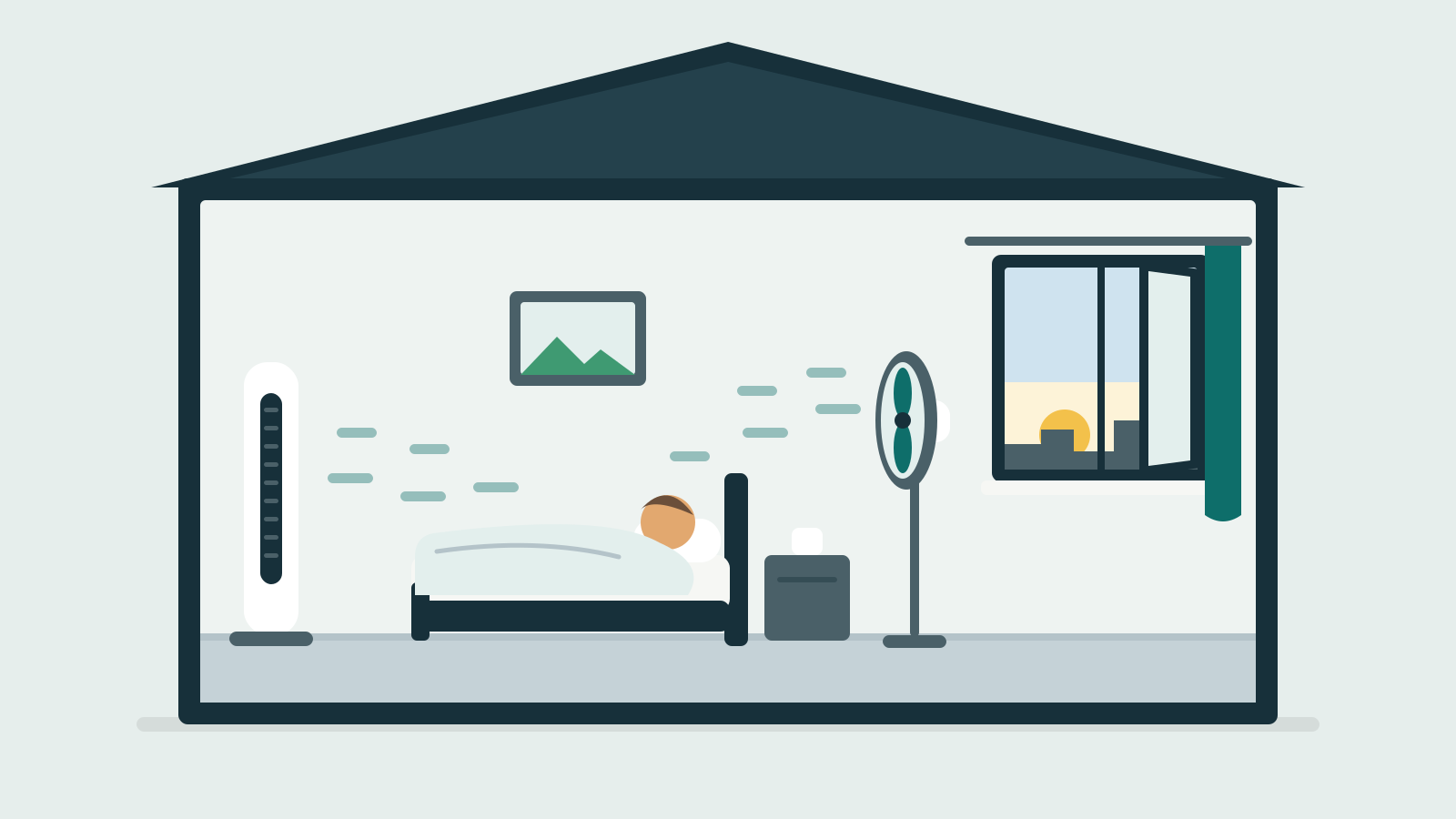
- The right shape for the room. A tower fan takes up little floor space. A pedestal fan stands taller and reaches further across a bed. A desk fan sits on a bedside table or chest of drawers.
Costs use 26.32p per kWh, the Ofgem price cap, Direct Debit average for England, Scotland and Wales for 1 October to 31 December 2026. Your own tariff may differ. How we calculate.
DC motor fans
Most cheap fans have an AC motor, which runs straight off the mains and usually has three speeds. A DC motor fan converts the mains to direct current first. That lets it run at much lower speeds, often with many more steps between slowest and fastest, and it usually uses less power for the same job.
For a bedroom the slow speeds are the point. On its lowest setting a DC fan can give a gentle draught that is easier to sleep with than the lowest of three fixed speeds. The trade-off is that DC fans usually cost more to buy.
The 3 DC motor fans in our list average 28W and 26dB. The other fans in our list average 46W and 35dB. At eight hours a night, that is £1.79 a month against £2.94.
Our picks
These are chosen by their specs against the list above. We haven't tested them ourselves; the reasons say which spec puts each one here.
For light sleepers
Dreo Tower Fan 518 (Cruiser Pro T1)
- Type
- Tower fan
- Power
- 35W
- Noise
- 20dB
- Cost per hour
- 0.9p
- Timer
- Remote control
The lowest noise rating of any fan in our list, at 20dB, though the maker doesn't say which speed that figure is for. It draws 35W, so a full night costs 7.4p. It has a timer and a remote. It has a DC motor, explained above.
Cheapest to run overnight
MeacoFan 1056 Air Circulator
- Type
- Desk fan
- Power
- 24W
- Noise
- 29dB
- Cost per hour
- 0.6p
- Timer
- Remote control
The lowest rated power in our list, at 24W, so a full night costs 5.1p. Its noise rating is 29dB. It has a timer, so it can switch off once you are asleep.
For a small bedroom
Dreo Tower Fan 307 (Nomad One)
- Type
- Tower fan
- Power
- 42W
- Noise
- 35dB
- Cost per hour
- 1.1p
- Timer
- Remote control
A tower fan stands in a corner and takes up little floor space. Its rated noise is 35dB. It draws 42W, or 1.1p an hour to run. It has a timer and a remote.
Using a fan in the bedroom
NHS and UKHSA advice is that electric fans can help when the air temperature is below 35°C. UKHSA also advises not to aim the fan directly at your body, as this can lead to dehydration. Point it so the air moves across the room or the bed rather than straight at you, and keep a glass of water by the bed.
A fan works best alongside the free things. Keep the curtains closed on a sunny bedroom window during the day, then open the window at night once the air outside is cooler than inside. A fan set near the open window, blowing into the room, helps draw that cooler air in. How to keep a bedroom cool in a heatwave has the full routine.
If the bedroom stays too hot to sleep in even with a fan, you need something that lowers the temperature of the room, which means an air conditioner. Air conditioner or fan compares the two.
Sources
Checked 15 October 2026.