Why wet washing causes damp
Every drop of water that leaves your clothes goes into the air of your home. Research by the Glasgow School of Art found that an average load releases around 2 litres of water as it dries indoors. In a closed-up home in winter, that water has nowhere to go. It settles on the coldest surfaces first: windows, outside walls, the corners behind wardrobes.
Do that a few times a week and those surfaces stay damp for long enough for mould to grow. The clothes suffer too. Washing that dries slowly in damp air can come out smelling musty.
Damp and mould can affect anyone's health, and the government's guidance says children, older people and people with health conditions are at greater risk. If someone in your home has breathing problems, it is worth taking extra care.
How to dry a load indoors
- Spin it hard. Use the fastest spin the fabric allows. Less water in the clothes means less in the air.
- Pick one room. A small room you can close off works best: a bathroom with an extractor fan, a utility room, or a spare room. Avoid bedrooms, where the damp air stays with you all night.
- Shut the door so the moisture stays in that room instead of spreading through the house.
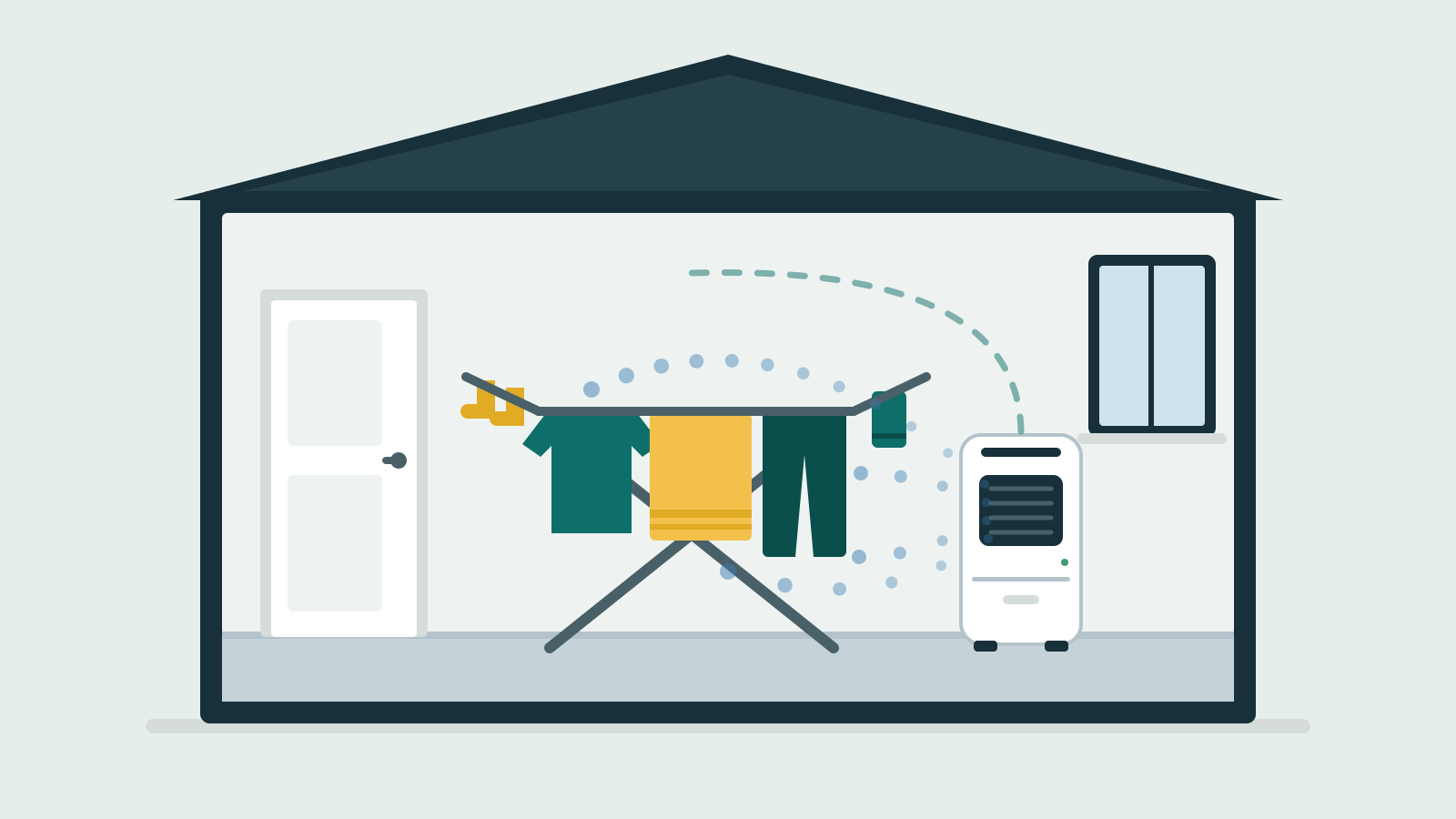
- Get the water out of the air. Either open the window and leave the extractor fan running, or close the window and run a dehumidifier in the room. Not both at once: a dehumidifier with the window open spends its time drying the outside air.
- Space the clothes out on an airer, so air can move between them. Turn thick things like jeans and towels halfway through.
- Wipe the window in that room afterwards if it has misted up.
Why not the radiators
Clothes on a radiator dry quickly, but all that water goes straight into a warm room and then spreads to the cold parts of the house. The clothes also block the heat from the room, so the heating works harder. If you have no other space, use a radiator in the room you've chosen to dry in, with the door shut and the window open.
Heated airer, dehumidifier or both
A heated airer warms the clothes so they dry faster than on a plain airer. It doesn't remove any water, so the room still needs a window open or a dehumidifier. A typical three-tier model costs about 39p for a five-hour load. See heated airer running costs and which heated airer to buy.
A dehumidifier takes the water out of the air and moves air over the clothes, so they dry without the damp spreading. A 12 litre model running for five hours costs about 26p. See the best dehumidifier for drying laundry.
Both together in a small closed room is the quickest way to dry a load indoors. The airer warms the clothes and the dehumidifier collects the water they give off.
Costs use 26.32p per kWh, the Ofgem price cap, Direct Debit average for England, Scotland and Wales for 1 October to 31 December 2026. Your own tariff may differ. How we calculate.
Tools that help
To take the water out of the air
Pro Breeze OmniDry 12L
- Type
- Compressor
- Extraction
- 12 litres a day
- Power
- 200W
- Noise
- 36dB
- Tank
- 2 litres
- Cost per hour
- 5.3p
- Laundry mode
Has a laundry mode, which keeps it running at full power instead of stopping at the humidity you set, and a 2 litre tank. At 12 litres a day it is the size most homes need for a weekly wash.
To dry clothes faster
BLACK+DECKER 63091 3-Tier Heated Airer with Cover
- Type
- Three-tier
- Power
- 300W
- Drying space
- 30 rails
- Holds
- 15kg
- Cost per hour
- 7.9p
- Cover included
Retailers list it with 30 rails and a 15kg load (BLACK+DECKER doesn't publish its own specs). The cover keeps the heat around the clothes, which helps them dry sooner. It costs 7.9p an hour to run.
If you rent and damp keeps coming back however careful you are, read what your landlord must fix.
Sources
- The Glasgow School of Art: Research highlights health and economic problems caused by our indoor drying habits (2012)
- GOV.UK: Understanding and addressing the health risks of damp and mould in the home
Checked 14 October 2026.