How heated airers differ
A heated airer is a frame of hollow rails warmed by an element, usually to a temperature you can touch. The rails warm whatever is hanging on them, which speeds up drying compared with an ordinary clothes horse. They come in four main shapes:
- Winged airers look like a standard clothes horse with fold-out sides. Easy to load and store, but they spread out across the floor.
- Three-tier airers stack the rails in layers, so they hold more washing in the same floor space.
- Compact airers are small and low-powered. They suit a few items, a baby's washing or a small room.
- Drying pods are a frame with a zipped cover and a heater or fan at the base. They use more power and trap the warm air around the clothes.
What to look for
- Enough rail space for one load. If a full wash doesn't fit, you end up drying the rest on radiators, which puts more water into the room and blocks heat from reaching it.
- A cover. It holds the warm air around the clothes instead of letting it rise off the rails. Some airers include one; for others it is sold separately.
- A timer. It switches the airer off when the clothes are likely to be done, so you don't pay to heat dry clothes overnight.
- The power rating in watts. This sets the running cost. A higher wattage usually means hotter rails and quicker drying, at a higher cost per hour.
- How flat it folds, if it has to live behind a door or under a bed between washes.
Our picks
These are chosen by their specs against the list above. We haven't tested them ourselves; the reasons say which spec puts each one here.
For most families
BLACK+DECKER 63091 3-Tier Heated Airer with Cover
- Type
- Three-tier
- Power
- 300W
- Drying space
- 30 rails
- Holds
- 15kg
- Cost per hour
- 7.9p
- Cover included
30 rails across three tiers and a 15kg capacity hold a full household wash in one go. It comes with a cover, and costs 7.9p an hour to run.
For a small flat
Homefront Slimline Electric Clothes Airer
- Type
- Compact
- Power
- 90W
- Cost per hour
- 2.4p
It draws 90W, which keeps the running cost down to 2.4p an hour, and it folds away. The trade-off is space: it is sized for a few items or a small load, not a family wash.
For drying fast
DrySoon Heated Drying Pod
- Type
- Drying pod
- Power
- 1kW
- Holds
- 10kg
- Cost per hour
- 26p
- Cover included
- Timer
A drying pod with a full cover and a 1000W heater puts much more heat around the clothes than an open airer. That power costs more, at 26p an hour, so it suits people who need clothes dry the same day rather than overnight.
On a budget
BLACK+DECKER 63099 3-Tier Heated Airer
- Type
- Three-tier
- Power
- 300W
- Holds
- 15kg
- Cost per hour
- 7.9p
A 300W three-tier airer with a 15kg capacity, sold without a cover, at 7.9p an hour. It comes without a cover, so throw a sheet over the top to get some of the same benefit. A plug-in timer will switch it off for you.
What they cost to run
Heated airers use far less power than a tumble dryer, but they run for longer. A five-hour load on the family pick costs about 39p, and on the compact one about 12p. Drying time depends on the fabric, how full the airer is and how warm the room is.
Costs use 26.32p per kWh, the Ofgem price cap, Direct Debit average for England, Scotland and Wales for 1 October to 31 December 2026. Your own tariff may differ. How we calculate.
Heated airer running costs lists every model we cover, per hour and per load.
Running cost calculator Put in the wattage of your own airer or tumble dryer to see what it costs per hour and per month.Where to put it so it doesn't cause damp
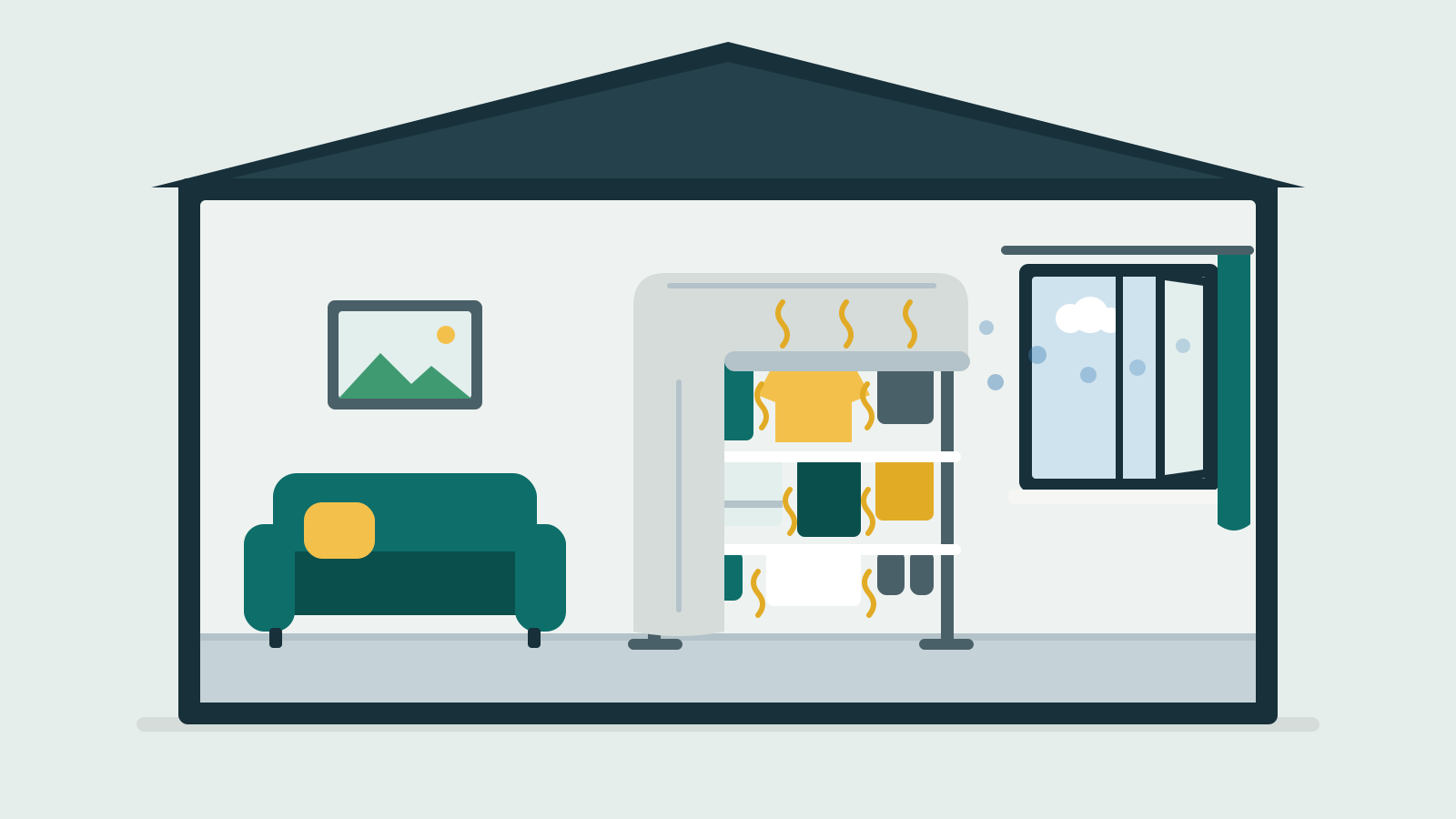
A heated airer dries clothes by turning the water in them into vapour, and all of that vapour goes into the room. In a cold house with the windows shut, it ends up on the windows and the coldest walls.
- Spin the washing on the fastest setting the fabric allows, so there is less water to remove.
- Use a small room with the door shut, so the moisture doesn't spread through the house.
- Open a window a crack, or run a dehumidifier in the same room.
- Keep the airer away from walls and curtains, so the damp air can move away from the clothes.
- Use the cover if you have one, and the timer, then air the room once the clothes are dry.