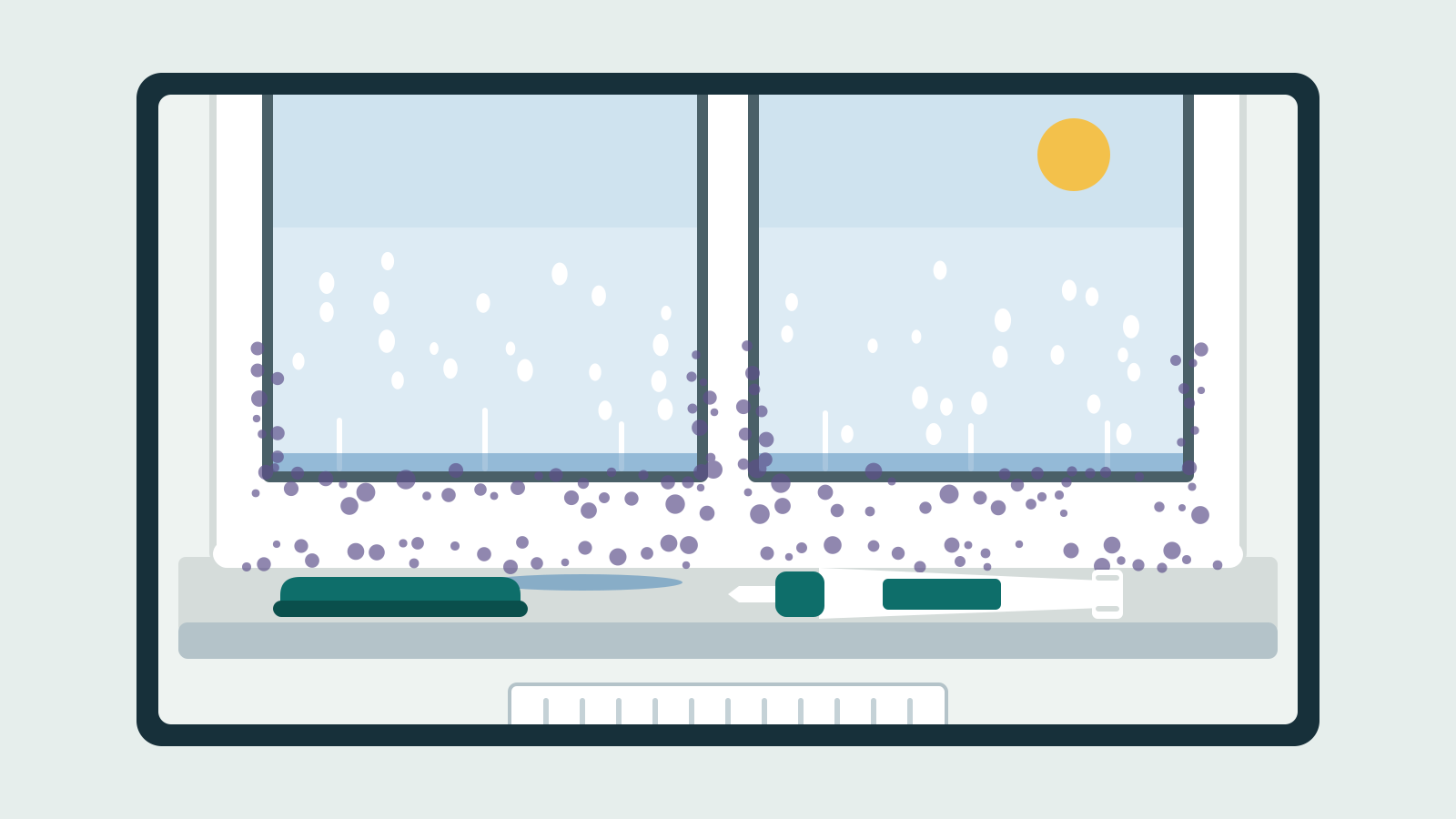
Why the seals go black first
Every morning in winter, water that condenses on the glass runs down and collects along the bottom of the frame. The silicone bead and the rubber gasket that holds the glass are the last places to dry. They also hold on to dust and grime, which gives mould something to feed on. A seal that is wet for hours most days is exactly where it grows.
So the black spots tell you two things: the room gets condensation, and the water isn't being cleared away. Cleaning deals with the spots, and the rest of this page deals with the water.
How to clean silicone sealant
This is the bead of white or clear sealant where the frame meets the glass or the window board.
- Dry the seal. Clear the water off the glass and sill first, then dab the sealant dry with kitchen roll. Product on a wet seal gets diluted and runs off.
- Apply a gel along the bead. A gel stays on the seal, including on the upright sides, where a spray would run down the glass.
- Leave it for the full time on the label, with the room ventilated.
- Wipe it off with a damp cloth, rinse the area with clean water, and dry it.
- Check it once it's dry. If grey or black marks remain, do it once more.
Rubber gaskets and timber frames
The black rubber gaskets in uPVC and aluminium windows can be harmed by strong cleaners. Use a product whose label says it is safe on rubber, try it on a hidden bit first, and check any care advice from the window maker. For light marks, warm water with a little washing-up liquid and a soft cloth may be all you need.
On wooden frames, push the wood gently with a fingernail where it's black. If it is soft or flaky, the timber is starting to rot. That needs a joiner or window repairer, and in a rented home it's one for the landlord.
When the sealant needs replacing
Silicone is slightly porous, and once mould grows into it the stain sits inside the bead where no cleaner reaches. If the marks don't shift after two goes, the seal itself has to come out.
- Cut the old bead out with a sharp blade or sealant remover tool, and pick out the last strips.
- Clean the gap with a mould remover, rinse it, and let it dry completely. New silicone won't stick to a damp surface.
- Run a new bead of sanitary or anti-mould silicone, smooth it, and leave it to cure for the time on the tube before it gets wet.
If you rent, ask your landlord before replacing sealant, and report the condensation at the same time. Photos taken before you clean help show what was there. More on what your landlord must fix.
Stop it growing back
- Clear the water every morning. Wipe or vacuum the glass, sill and the bottom of the frame before the water soaks into the seal.
- Open trickle vents and leave them open, or open the window for a short while after you get up.
- Pull curtains and blinds back from the glass, so the air behind them doesn't get cold and wet.
- Bring the room's humidity down if the windows stream most mornings. See why windows get wet every morning.
Products for the job
Chosen by type and specs. We haven't tested them; the reasons say why each one fits.
For cleaning sealant
TidyBond Mould Remover Gel
- Type
- Gel
- Size
- 220ml
A gel is made to cling to the seal for the whole contact time, which suits window beads and the vertical edges of the frame. It comes in a 220ml pack. TidyBond doesn't publish what's in it, so check the label for bleach and for the surfaces it suits, and keep it off rubber gaskets unless the label says it's safe.
For clearing condensation each morning
Kärcher WV 2 Plus N
- Type
- Cordless
- Tank
- 100ml
- Battery
- 35 minutes
Getting the water off the glass and sill before it reaches the seal is what stops the mould returning. This one is rated to run for 35 minutes on a charge and holds 100ml of water. More on choosing a window vac.
When to get help
If the mould has spread from the window onto the wall around it, see how to get rid of black mould on walls. Government guidance for England on damp and mould says very small amounts of mould can usually be cleaned off at home, but larger areas should only be dealt with by qualified professionals. If the mould covers a large area, or keeps coming back after cleaning, get a professional in, or report it to your landlord or housing association in writing if you rent.
If anyone in your home has asthma, another lung condition or a weakened immune system, let someone else do the cleaning and keep them out of the room. If you're worried about symptoms such as a cough, wheezing or skin rashes, speak to your GP, or use NHS 111 if you think you need medical help right now. The government guidance on the health risks is linked below.
Sources
- GOV.UK: Understanding and addressing the health risks of damp and mould in the home
- NHS: Can damp and mould affect my health?
- NHS: When to use NHS 111
- UK Health Security Agency: Sodium hypochlorite (bleach), general information
Checked 15 October 2026.