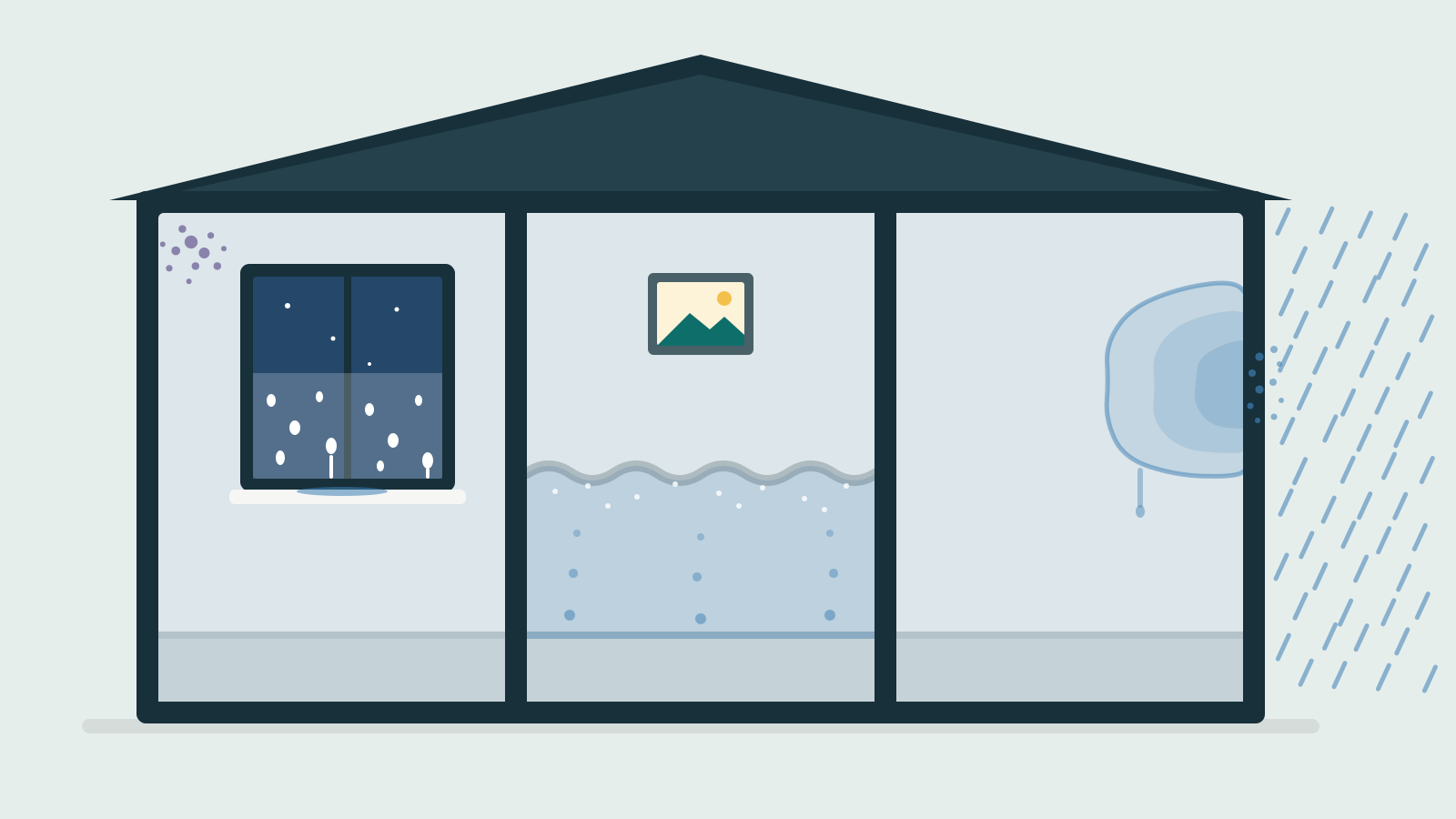
The three types at a glance
| Condensation | Penetrating damp | Rising damp | |
|---|---|---|---|
| Where the water comes from | The air inside: breathing, cooking, showers, washing | Outside, through a fault in the roof, walls, windows or gutters | The ground, soaking up through the base of the wall |
| Where you see it | Windows, outside walls, corners, behind wardrobes, bathrooms, kitchens | Anywhere on a wall or ceiling, often near a gutter, chimney or window | Ground-floor walls only, low down, from the skirting up |
| What it looks like | Water droplets, black mould spots, musty smell | A patch with a clear edge that spreads, stained ceilings, bubbling paint | A tide mark, white salty deposits, crumbling plaster, rotting skirting |
| When it's worse | Cold weather, mornings, after cooking or showers | During and after rain, or wind-driven rain on one side of the house | All year, with little change from day to day |
| Who fixes it | Usually you, with ventilation, heat and less moisture | A builder or roofer | A surveyor first, then a builder |
Condensation
Government guidance describes condensation as moisture produced inside the home that cools and settles on colder parts of the building, and calls it the most common form of damp. Warm, moist air touches a cold window or wall, cools below its dew point, and the water comes out on the surface.
It follows the cold. Look for it on the glass, on outside walls, in the top corners of rooms, behind furniture pushed against an outside wall, and inside wardrobes. It is worst in rooms that are closed up and lightly heated, such as bedrooms, and in kitchens and bathrooms. Black mould spots that come back after cleaning are its usual sign.
You can check it with a hygrometer. If the room reads high humidity first thing in the morning and the wet patches are on the coldest surfaces, condensation is the likely cause.
Mould risk checker Enter your room's temperature and humidity to see the surface temperature at which walls and windows start to get wet.Penetrating damp
Penetrating damp is water coming in from outside through a defect in the walls, roof, windows or floors. Common causes are blocked or leaking gutters and downpipes, slipped or missing roof tiles, cracked render, worn mortar between bricks, failed seals around windows, and leaking flashing around chimneys.
The giveaway is that it changes with the weather. A patch that darkens or spreads after heavy rain, and shrinks in a dry spell, points to water getting in. It can appear at any height, including on ceilings, and is often on the side of the house that takes the most wind and rain. Look outside, directly opposite the patch, for an overflowing gutter or a crack.
Rising damp
Rising damp is moisture from the ground rising through the parts of the building that touch it. Government guidance notes it is usually found in older properties. Most houses have a damp-proof course, a barrier near the bottom of the wall, and rising damp happens when it is missing, has failed, or has been bridged. Soil, a raised path or a patio laid above the damp-proof course can let water bypass it.
It only affects ground-floor and basement walls and starts at floor level. Signs are a tide mark low on the wall, white powdery salts on the plaster, peeling wallpaper near the skirting, and skirting boards or floor timbers that are soft or rotting.
A quick test you can do at home
- Dry a small patch of the damp wall with a hairdryer.
- Tape a square of kitchen foil over it, sealing all four edges.
- Leave it for a day or two, then peel it off.
- If the outside of the foil is wet, the moisture is coming from the room, which points to condensation. If the wall underneath is wet and the outside of the foil is dry, the moisture is coming through the wall.
It isn't conclusive, but it tells you whether to start with ventilation or with a look at the outside of the building.
What to do next
- Condensation: start with ventilation and steady heat. How to stop wet windows and how to dry clothes indoors without damp.
- Penetrating or rising damp: fix the source first. Drying the room won't stop water that keeps coming in.
- If you rent: leaks and building faults are your landlord's job, and so is damp caused by poor ventilation or heating. Read what your landlord must fix.
- If there is mould: clean it safely once the cause is in hand. How to get rid of black mould on walls.
Sources
Checked 14 October 2026.